Mouth cancer does not always make itself known in obvious ways, at least not in the early stages. That is precisely what makes it worth paying close attention to. The changes that indicate something may be wrong are often subtle, easy to dismiss, and frequently attributed to other causes, like a minor infection or a bitten cheek that is slow to heal. Knowing what to look for can make a real difference to outcomes.
Why Early Detection Changes Everything
The survival rates for mouth cancer are significantly better when it is caught early. When detected at the earliest stage, before the cancer has spread to nearby tissue or lymph nodes, survival rates are reported to be considerably higher than in later stages. The challenge is that many patients do not seek help until the cancer has already progressed, often because the early signs were present but not recognised as a cause for concern.
This is where routine dental appointments play a genuinely protective role. Dentists are in a strong position to spot changes in the mouth that a patient might not notice themselves, particularly in areas like the base of the tongue and the back of the throat, which are difficult to examine in a mirror.
Signs That Should Trigger a Mouth Cancer Screening
A mouth cancer screening should be considered whenever any of the following are present and do not resolve within two to three weeks:
- A persistent sore or ulcer in the mouth that does not heal in the normal timeframe
- A red patch (erythroplakia) or white patch (leukoplakia) on the tongue, gums, or lining of the cheek
- Unexplained swelling or a lump anywhere in or around the mouth, jaw, or neck
- Difficulty swallowing, chewing, or moving the jaw or tongue
- Persistent numbness or a strange sensation on the lip or tongue without an obvious cause
- Unexplained bleeding in the mouth that is not related to gum disease or injury
- A hoarse voice or sore throat that lasts longer than usual without an obvious explanation
Who Is at Higher Risk
Mouth cancer can affect anyone, but certain factors raise the probability. Tobacco use in any form, including cigarettes, cigars, and chewing tobacco, is one of the strongest risk factors. Alcohol consumption, particularly in combination with tobacco, multiplies the risk considerably. The human papillomavirus (HPV), specifically HPV-16, is now recognised as a significant contributing factor, particularly in cancers affecting the oropharynx at the back of the mouth and throat.
Age is also a factor, with most cases diagnosed in people over 40, although the incidence in younger adults has been rising. Men are statistically more likely to develop mouth cancer than women, though the gap has been narrowing. Prolonged sun exposure is a risk factor specifically for cancer affecting the lips.
It is important to note that mouth cancer does develop in people with none of these risk factors. That is one of the reasons why screening should be a routine part of dental care rather than something reserved only for high-risk patients.
What Happens During a Screening
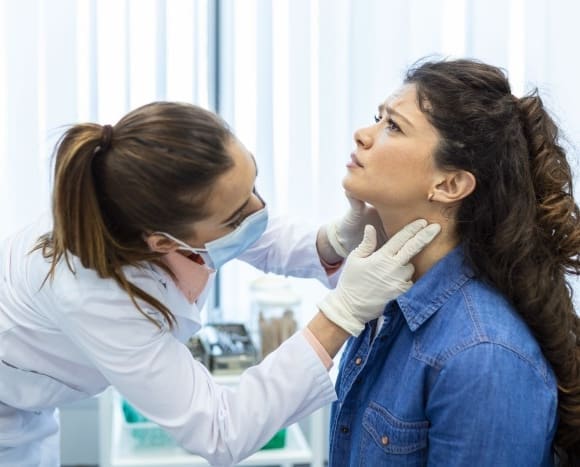
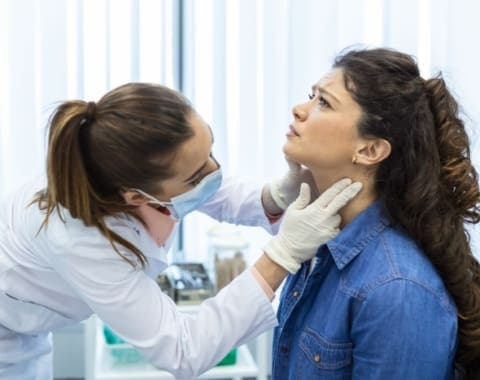
A clinical mouth cancer screening performed at a dental practice is quick and does not require any special preparation. Your dentist will examine the soft tissues of the mouth systematically, looking at the tongue, floor of the mouth, palate, cheeks, gums, and throat. They will also feel the lymph nodes around the jaw and neck to check for any swelling that might suggest something worth investigating further.
At Manningtree Dental Practice, mouth cancer screening is incorporated into routine dental appointments. The practice treats it as a standard part of dental care rather than an optional add-on, which reflects the broader philosophy of preventative dentistry that the team applies across all treatment areas.
What Happens If Something Is Found
Finding something unusual during a screening does not mean a cancer diagnosis. Many lesions in the mouth are entirely benign. However, anything that raises concern will be monitored closely or referred for further investigation. This might involve a referral to a specialist for a biopsy, where a small sample of tissue is taken and examined under a microscope to determine whether abnormal cells are present.
The important thing is that a finding during a routine screening, even if it does turn out to be something serious, represents a much earlier point in the disease than if the same lesion had only been noticed when symptoms became impossible to ignore. Earlier investigation means earlier treatment, and earlier treatment means better outcomes.
Self-Examination Between Dental Visits
While a professional screening is the most reliable way to identify changes, patients can and should check their own mouths between appointments. The best time to do this is after brushing, in a good light with a small mirror. Look for any changes in the colour or texture of the soft tissues and run a finger along the floor of the mouth and cheek lining to feel for any new lumps. If anything feels or looks different from what you would normally expect, book an appointment and mention it specifically.
Self-examination is not a replacement for professional screening, but it is a useful habit that keeps you engaged with what is normal for your own mouth.
Frequently Asked Questions
1. How often should I have a mouth cancer screening?
For most adults, a screening during each routine dental check-up, typically once or twice a year, is the recommended approach. If you have known risk factors, your dentist may suggest monitoring more frequently.
2. Is mouth cancer screening painful?
Not at all. The examination is entirely non-invasive. Your dentist looks and feels around the mouth and neck using gloved hands and a light. There is no discomfort involved and no recovery time required.
3. Can a mouth cancer screening be done even if I have no symptoms?
Yes, and in fact, that is the ideal scenario. Screening when there are no symptoms gives you the best chance of catching any early changes before they develop further. Most people who benefit most from screening are those who felt nothing was wrong at the time.