
If you have ever walked out of a hygiene appointment feeling like your teeth are only half-clean, you are not alone. The traditional scale and polish has been the default for decades, and it does a solid job. But a growing number of patients are asking about something different – a treatment that feels gentler, reaches further, and leaves their teeth noticeably cleaner. That treatment is Airflow, and it is worth knowing exactly what it does before you dismiss it as just another dental trend.
This article will examine how both treatments work, identify their respective benefits, and help you determine which one is best suited for you.
How a Standard Scale and Polish Works
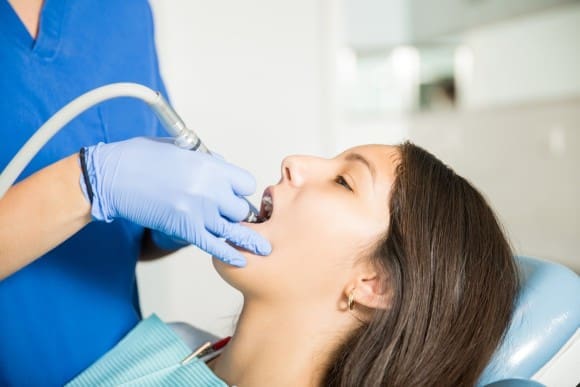
A scale and polish is a two-step process. First, a hygienist uses a scaler or ultrasonic device to remove tartar – the hard mineral deposits that form when plaque is left to harden on the tooth surface. Then, a rotating rubber cup with a gritty polishing paste buffs the enamel smooth, removing surface stains and creating a finish that makes it harder for plaque to stick.
It is a tried and tested method. For patients with relatively healthy gums and minimal build-up, it works well. But there are limitations. Metal instruments can be uncomfortable for individuals with sensitive teeth. And some areas – particularly around orthodontic brackets, implants, and below the gumline – are difficult to clean properly.
What Airflow Teeth Cleaning Actually Does
Airflow teeth cleaning uses a pressurised jet of water, fine powder, and air to remove biofilm, soft deposits, and staining from the tooth surface, between teeth, and below the gumline. The technology was developed by EMS (Electro Medical Systems) in Switzerland, and the latest version – known as Guided Biofilm Therapy – follows a clinically structured protocol that targets bacterial biofilm before it becomes the calculus that causes gum disease.
The key difference is what it removes. A scale and polish mainly tackles tartar and surface stains. Airflow specifically targets biofilm – the thin, sticky layer of bacteria that coats every surface of your mouth, including areas that conventional instruments simply cannot reach. Biofilm is the starting point for gum disease and tooth decay, so removing it thoroughly matters.
The powder used in the procedure is erythritol-based – a very fine, low-abrasion formula that is gentle enough for use on implants, veneers, and orthodontic appliances. Many patients describe the sensation as similar to a power shower on their teeth rather than anything uncomfortable.
Comparing the Two: Key Differences at a Glance
Here is how the two treatments differ across the factors that tend to matter most to patients:
- Biofilm removal: Airflow removes biofilm systematically across the whole mouth. Scale and polish do not specifically target biofilm.
- Comfort and Heated: Airflow is widely reported as more comfortable, particularly for people with sensitive teeth or gum sensitivity.
- Reach: The Airflow jet reaches into pockets, between teeth, and around restorations that metal instruments struggle to access.
- Stain removal: Both remove surface staining, but Airflow tends to produce a more even result, especially for heavy tea or coffee staining.
- Suitability for restorations: Airflow is safe on implants, veneers, composite bonding, and orthodontic appliances.
- Time: Airflow treatment typically takes a similar amount of time but covers more ground within that appointment.
Who Benefits Most From Airflow Treatment
Airflow is particularly well suited to patients who have dental implants, as the erythritol powder will not damage implant surfaces the way metal instruments can. It is also a strong option for anyone with fixed orthodontic braces, since the jet cleans around brackets and wires far more effectively than a scaler.
People with early gum disease tend to benefit significantly, as the ability to clean below the gumline without the discomfort of traditional deep scaling makes the process more tolerable. Patients with heavy staining from coffee, tea, or red wine also report noticeably better results with Airflow compared to a standard polish.
That said, Airflow is not always a standalone replacement for scaling. In cases with significant calculus build-up, a hygienist will often use an ultrasonic scaler to remove hardened deposits first, then follow with Airflow to clean biofilm and polish the surface. The two approaches work well together.
Does It Actually Whiten Your Teeth?
This is one of the most common questions patients ask. Airflow does remove extrinsic staining – the discolouration that sits on the outside of your enamel from food and drink. After treatment, many people notice their teeth look brighter, cleaner, and more even in colour.
What it does not do is change the natural shade of your enamel. If you want teeth that are several shades lighter, you would need professional whitening treatment alongside or after your hygiene appointment. Airflow clears the way for whitening to work more evenly by removing the biofilm and staining that sits on top of the enamel surface, so the two treatments complement each other well.
Airflow at Manningtree Dental Practice
Manningtree Dental Practice, based on the High Street in Manningtree, Essex, offers Airflow as part of its dental hygiene service alongside stain removal and scale and polish. The practice has been a fixture in the community for over 40 years and uses the latest clinical technology to ensure patients get thorough, evidence-based care.
The hygiene team at the practice takes a preventive approach – meaning the goal is not just to clean your teeth today, but to reduce the likelihood of problems developing over time. For patients managing gum disease, maintaining implants, or simply wanting a deeper level of clean than a standard appointment provides, Airflow is a well-established option within the practice’s hygiene programme.
How Often Should You Have Airflow Treatment?
Frequency depends on your individual oral health situation. For most patients with healthy gums, twice a year is a sensible baseline, which aligns with the standard recall interval for most hygiene appointments. For people managing gum disease or with a higher tendency to build up biofilm or staining, three to four appointments per year may be recommended.
Frequently Asked Questions
1. Is Airflow teeth cleaning painful?
For most patients, Airflow is more comfortable than a traditional scale and polish. The sensation is often described as a pressurised stream of water rather than the scraping associated with metal instruments. Patients with sensitive teeth or inflamed gums may experience mild sensitivity during treatment, but this typically settles quickly. If you have had uncomfortable hygiene appointments in the past, Airflow is worth discussing with your hygienist as an alternative.
2. Can Airflow be used if I have dental implants or veneers?
Yes – in fact, Airflow is one of the preferred methods for cleaning around implants and cosmetic restorations precisely because the erythritol powder is non-abrasive and will not scratch or damage these surfaces. If you have restorations in your mouth, mention this to your hygienist before treatment begins.